Booking choice: The private pyramids tour with a camel ride, ★ 4.9 (7,825). Check dates Compare the options below
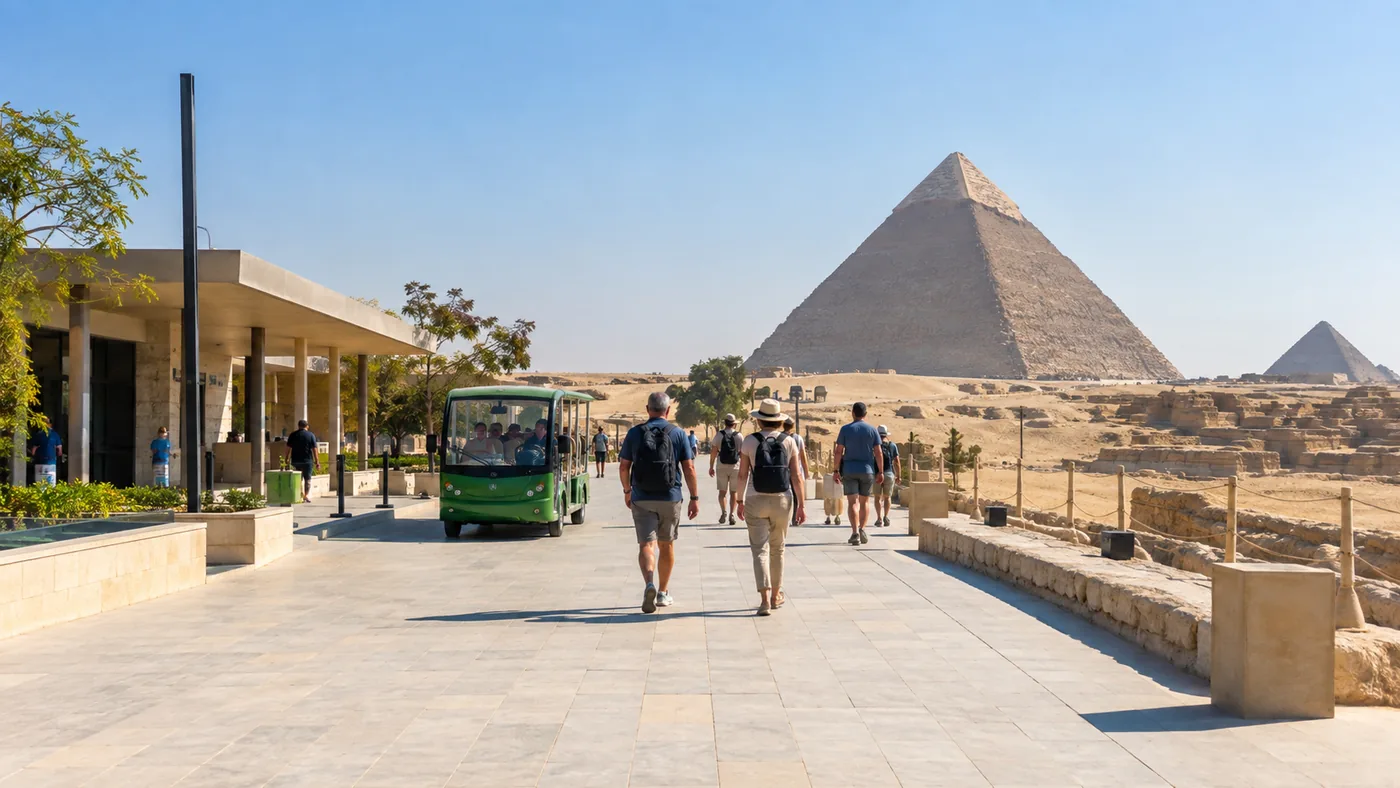
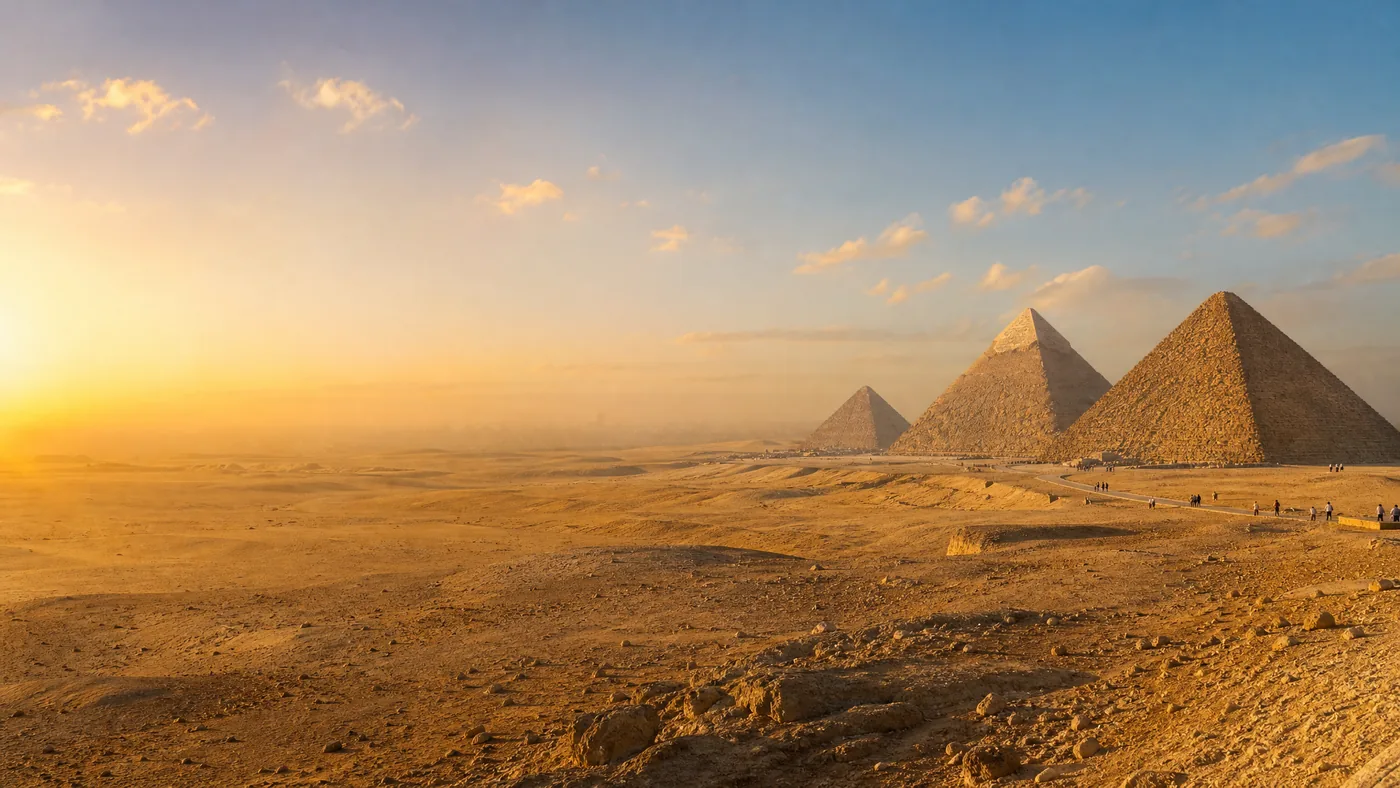
The Giza Plateau is a big, open desert site on the edge of Greater Cairo, with very little shade, sand underfoot and a lot of walking between the shuttle stops. It is also one of the most visited places in Egypt, so the people who sell rides, souvenirs and services know exactly where to find you.
This guide covers what to wear, what to pack, how to handle toilets, tips and sellers, the rules on rides, drones and photos, and how to show respect during Ramadan. For the best months and hours, see the best time to visit, and for a visit on your own, the pyramids without a tour.
The quick answer
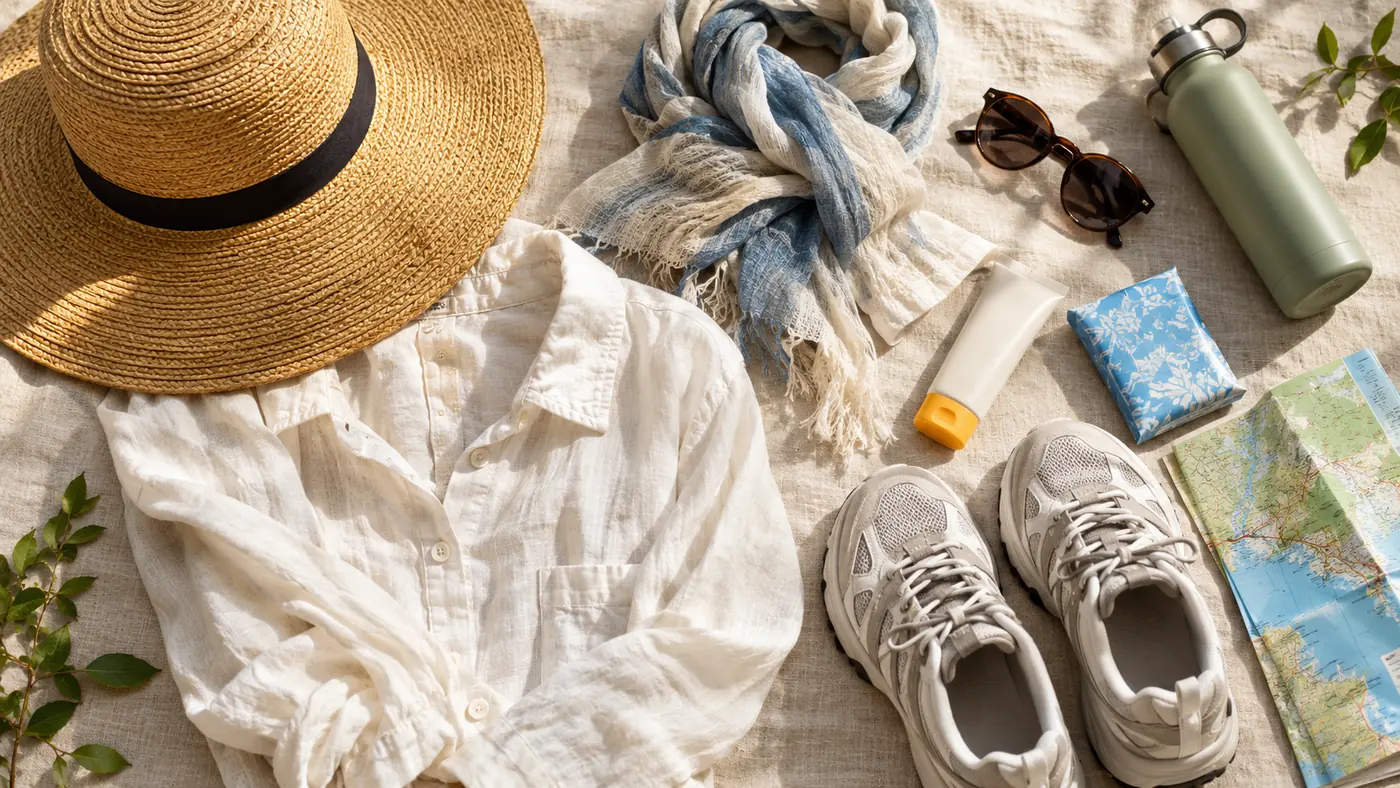
Wear light, loose clothes that cover your shoulders and knees, and closed shoes with grip. Pack a hat, sunglasses, sunscreen, at least a litre or two of water, tissues, hand sanitiser and small cash notes for tips and toilets. Tickets at the office are card only, so bring a bank card, or show the QR code of a ticket bought on the Ministry's official website (take a screenshot, as the signal can be weak). Say a polite no to sellers and walk on, accept nothing handed to you as a gift, and agree the route, duration and total price of any camel or horse ride before you get on. Drones are illegal without official permission, climbing a pyramid is a crime, and personal photos on the plateau do not need a separate ticket.
Is there a dress code for the pyramids?
No, there is no formal dress code for the Giza Plateau. Egypt is a conservative country, though, so covered shoulders and knees are respectful, and the same clothes protect you from the sun.
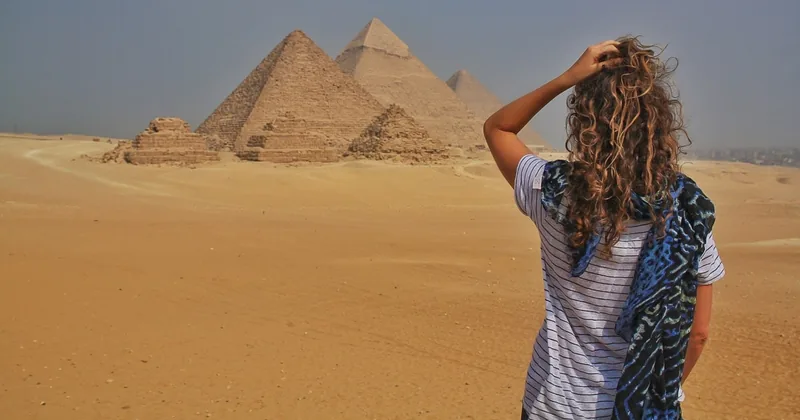
Canada's travel advice suggests that women wear knee-length or longer dresses and long sleeves, and that men avoid shorts outside tourist areas. At the pyramids nobody will turn you away in shorts, but loose linen or cotton trousers, a long skirt and a light long-sleeved shirt are cooler in the open desert than bare skin, and they are appreciated. A cotton scarf earns its place in your bag: it shades your neck, keeps off the dust on a windy day and covers your hair if your day also takes you to a mosque in Cairo, where covered arms and legs are expected and women cover their hair.
Colour matters less than fabric. Choose something breathable that you do not mind getting dusty, because the sand gets everywhere and the stone at the base of the pyramids is rough.
Your own Egyptologist and air-conditioned car from your hotel, with entry to the pyramids area and a camel ride of 10 or 30 minutes, rated 4.9 from 7,825 reviews.
Check dates for the private pyramids tour with a camel rideWhat should you wear on your feet and pack for the day?
Closed shoes with good grip, plus a hat, sunglasses, sunscreen, plenty of water, tissues and a bank card. The ground is sand and uneven stone, and there is little shade between the stops.
- Shoes: trainers or walking shoes with a firm sole. Sandals fill with sand, and if you go inside a pyramid you walk up steep, narrow passages on wooden boards.
- Sun protection: a wide hat, sunglasses and sunscreen, even in winter. From June to August Cairo averages about 35 degrees, and the open plateau can feel hotter.
- Water: carry more than you think you need. Drinks are sold on site, but the distances between stops add up.
- Payment: a bank card for tickets, which are card only at the office, and small cash notes for tips and toilets.
- Your ticket: if you booked on the Ministry's official website or on GetYourGuide, save a screenshot of the QR code, because phone reception at the gate can be poor.
- A student card: students with a valid card pay a reduced rate.
- A light bag: a small backpack leaves both hands available on the shuttle buses and in the passages.
Should I bring toilet paper to Egypt?
Yes, carry a small pack of tissues and some hand sanitiser. Hotels and the new visitor facilities have standard toilets, but older sites and roadside stops may run out of paper.
At some toilets an attendant hands out paper in exchange for a small tip, so keep a few low notes in an easy pocket. This is normal and nothing to worry about, and it is one of several moments in the day when small cash helps: guides, drivers and cameleers are usually tipped, and most tours list tips as not included. A private tour such as the Private Pyramids Tour with Camel Ride covers your car, guide and entry to the pyramids area, but tips, lunch and any ticket inside a pyramid are extra.
On a long day tour, ask your guide where the next proper toilet stop is before you leave the visitor centre. Tours that combine Giza with Saqqara or Dahshur, described in the guide to the pyramids beyond Giza, spend more time between sites.
How do you handle sellers and 'gifts' at the pyramids?
A polite, firm no, thank you and walking on is enough. Do not accept anything handed to you as a gift, and buy tickets only at the official office or on the official website.
Sellers at the pyramids can be persistent, and the UK government notes that scammers and touts sometimes target foreign visitors in tourist areas. The common patterns are easy to spot once you know them:
- The gift: someone places a headscarf or a small souvenir in your hand, then asks for money. Hand it back with a smile and keep walking.
- The vague price: a ride quoted cheaply turns out to be per person, one way. Agree the total for everyone, the route and the duration before you start.
- The closed area: a man without a badge tells you a section is closed and offers to take you another way. Check with the staff at the shuttle stops instead.
- The unofficial ticket: tickets come only from the ticket office at the visitor centre or the Ministry's official website.
A guide takes most of this off your shoulders, because sellers tend to leave guided visitors alone. Even so, kindness works better than irritation: most sellers are simply making a living, and a calm no is respected.
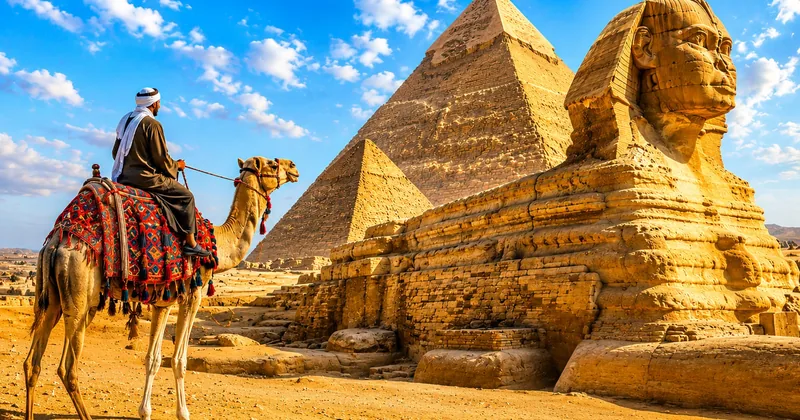
A private Egyptologist meets you at your hotel, handles the tickets and keeps the sellers at a distance, with a camel ride of 10 or 30 minutes. Options add the Grand Egyptian Museum, Memphis and Saqqara, or a felucca on the Nile.
Explore the private pyramids tour with a camel rideCan you still ride a camel or horse at the pyramids?
Yes. Camel and horse rides are now limited to designated areas away from the main paths, and riding inside the complex itself is not allowed. They have not been banned.
When the new entrance system opened in 2025, the operators were moved to designated zones. Headlines in June and July 2026 claimed that Egypt had banned the rides, but they trace back to social media posts and a 2020 announcement by an animal rights group, not to any government decision. Since October 2024, a national programme run by the Ministry of Tourism and Antiquities with the Ministry of Agriculture has looked after the welfare of horses and camels at archaeological sites, with a veterinary unit at Giza.
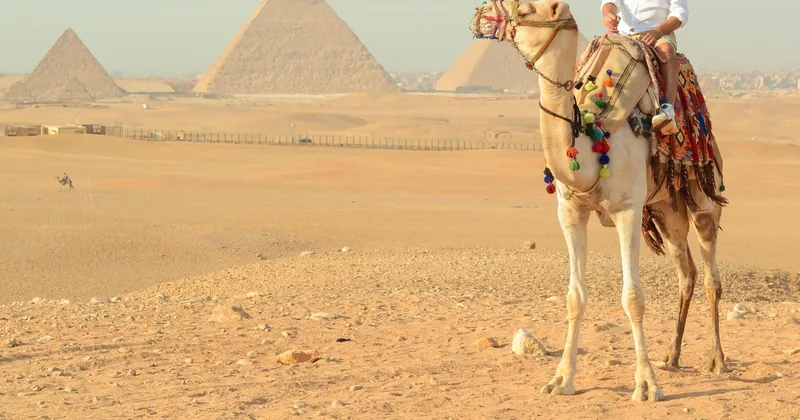
If you ride, agree the route, the duration and the total price before you get on, and check that the animal looks healthy and rested. The Sunrise Camel Ride and Pyramids Tour (4.7 from 955 reviews) starts with a 5 am pickup and an hour on a camel or horse from a stable outside the plateau, then breakfast and a two-hour guided tour of the complex. Quad bikes also run in the desert outside the plateau, as the quad bike ride by the pyramids explains, and its pyramids-area ticket is not included.
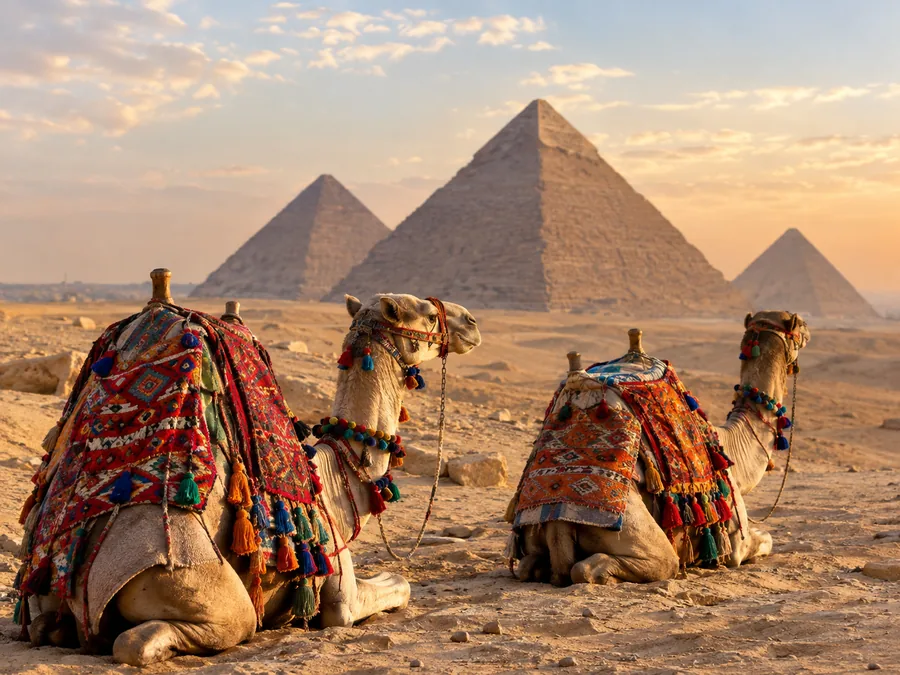
An hour on a camel or horse at first light from a stable outside the plateau, an oriental breakfast, then two hours with a guide among the pyramids.
Check dates for the sunrise camel ride and pyramids tourWhat are the dos and don'ts at the pyramids?
Do take as many personal photos as you like; they do not need a separate ticket. Do not climb the pyramids, fly a drone or step over barriers.
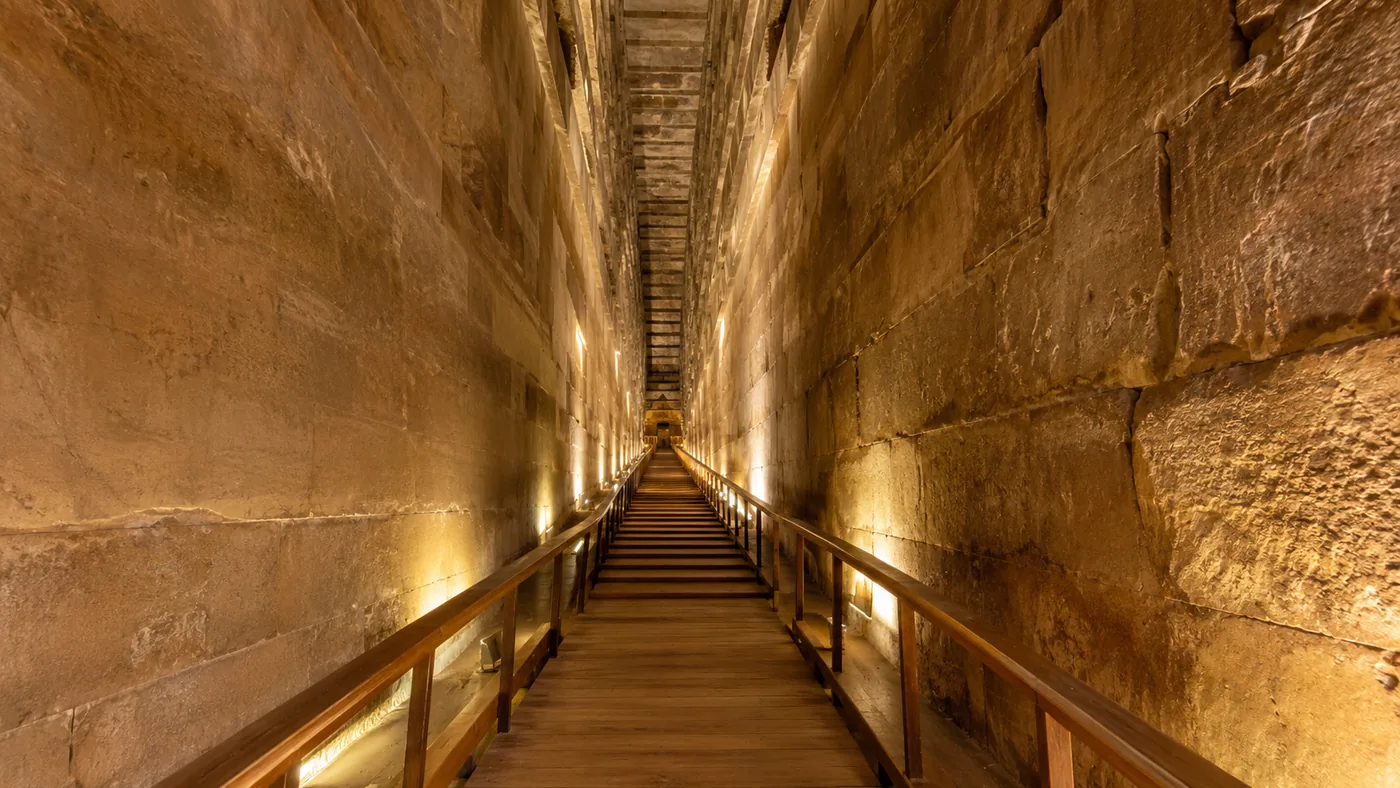
Climbing the outside of a pyramid has been a crime since 2019, when the antiquities law was amended, and it is punishable by at least a month in prison, a fine, or both. Drones are a serious matter too: flying one without official permission is illegal in Egypt, and Canada's travel advice warns of long jail terms and deportation for unauthorised use. Leave yours at home. Inside the pyramids, photography is usually not allowed, and commercial shoots need a permit. At the Grand Egyptian Museum tripods, selfie sticks, drones and flash are not allowed. What the inside of a pyramid is really like is in the guide to going inside.
| Situation | Do | Don't |
|---|---|---|
| Someone hands you a scarf or souvenir | Hand it back politely and walk on | Keep it, then argue about the price |
| A camel or horse ride | Agree route, duration and total price first | Get on before the price is settled |
| Buying your entry ticket | Pay by card at the office or book on the official website | Buy from anyone outside the gate |
| Photos on the plateau | Take personal photos as you like | Fly a drone or set up a commercial shoot |
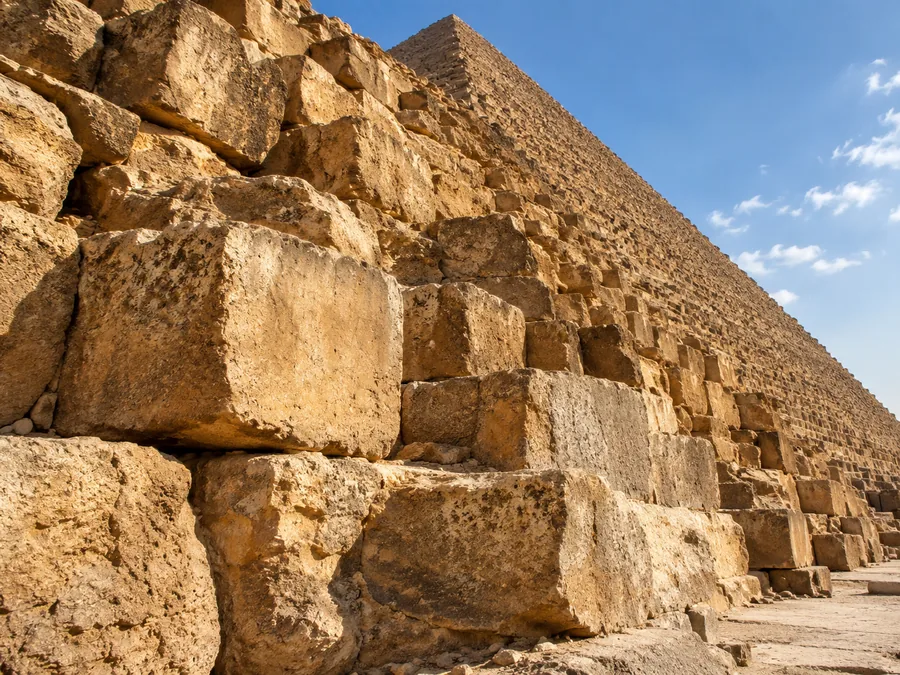
| At the base of a pyramid | Touch the blocks and take your time | Climb the outside |
| Inside a pyramid | Bend over, hold the handrails, go at your pace | Expect to take photos inside |
| Tips and toilets | Keep small notes in an easy pocket | Rely on cash for tickets |
Is it safe to go to Egypt to visit the pyramids?
Cairo and Giza sit outside every area flagged by the UK, US, Canadian and Australian travel advisories, which focus on North Sinai and remote desert borders. At the plateau, the main nuisance is persistent sellers.
The UK Foreign Office advice, updated on 4 August 2026, advises against all travel only to North Sinai and areas near the Libyan border, and against all but essential travel to parts of South Sinai, the Western Desert and a few other remote regions; Cairo and Giza are not among them. Canada's advice, updated on 24 September 2026, asks travellers to exercise a high degree of caution in Egypt overall, as it does for many countries, and the US rates Egypt at its second of four levels. Millions of people visit the pyramids each year.
As at any famous landmark, expect persistent sellers and agree any price before you accept a service. Check your own government's advice before you travel, for example the UK travel advice for Egypt or the Canadian travel advice.
How do you show respect during Ramadan and in Cairo?
Sites stay open during Ramadan with shorter hours, and eating and drinking discreetly during daylight is appreciated. Elsewhere, modest clothes and a friendly greeting go a long way.
Ramadan 2027 is expected to start in early February and end in early March, with the exact dates set by the sighting of the moon. The pyramids stay open, but hours are shorter, so check the official site the day before. Many people are fasting from dawn to sunset, so it is appreciated if you eat and drink out of sight during the day; carry your water, but sip it discreetly.
Ask before you photograph someone, dress modestly in the old quarters and mosques, and accept a no with good grace. If you would feel more at ease with a woman guide, the Female-Guided Pyramids and Museum Day (4.8 from 1,724 reviews) spends eight hours with a female Egyptologist at the pyramids, a museum of your choice and the Khan el-Khalili bazaar, with lunch included.
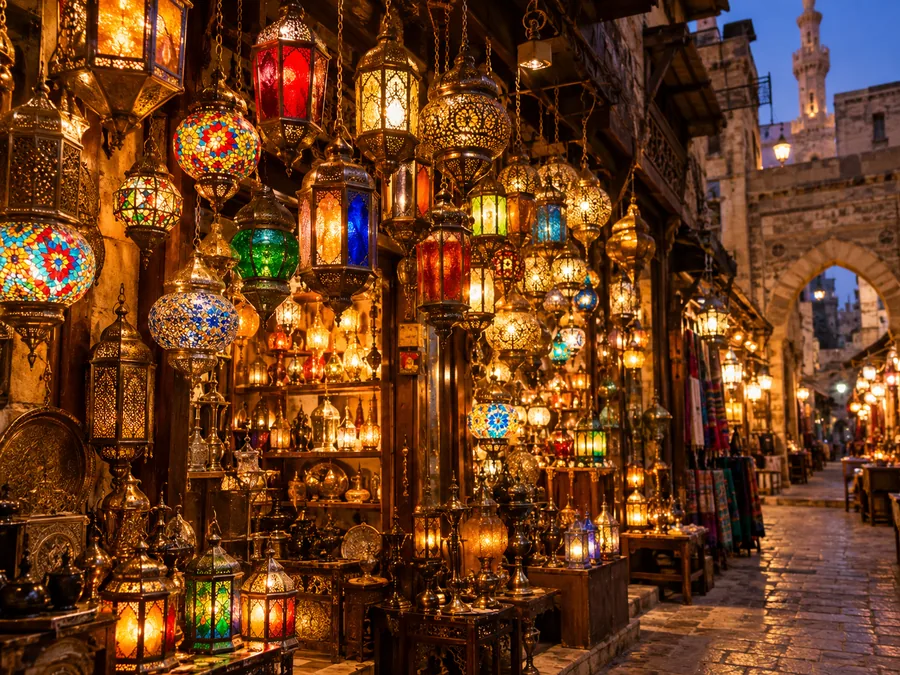
Eight hours with a female Egyptologist: the pyramids and the Sphinx, the Grand Egyptian Museum or the old Egyptian Museum by option, lunch and the Khan el-Khalili bazaar, with hotel pickup.
Explore the female-guided pyramids dayFrequently asked questions
Can I wear shorts at the pyramids?
Yes, nobody will stop you, as there is no formal dress code. Loose trousers or a long skirt and a light long-sleeved shirt are more respectful and keep the sun off your skin better.
Do I need cash at the pyramids?
Not for tickets: the ticket office takes bank cards only, and you can also book online. Bring small cash notes for tips, toilets and drinks.
Can I take photos at the pyramids?
Yes, personal photos on the plateau do not need a separate ticket. Inside the pyramids photography is usually not allowed, and drones are illegal without official permission.
Are camel rides at the pyramids banned?
No. Rides were moved to designated areas away from the main paths in 2025, and riding inside the complex is not allowed. Agree the route, duration and total price before you get on.
Ready to book
Choose your tour
Check your date and the live price on GetYourGuide; the refund terms are shown on each option.
Private Pyramids Tour with Camel Ride
- Hotel pickup and drop-off in Cairo or Giza
- A private Egyptologist guide and an air-conditioned car
- Entry ticket to the pyramids and Sphinx area
Female-Guided Pyramids and Museum Day
A woman Egyptologist for the pyramids, the Sphinx, a museum of your choice, lunch and Khan el-Khalili
Sunrise Camel Ride and Pyramids Tour
An hour on a camel or horse at first light from a stable outside the plateau, breakfast, then a guided tour